 Racing
 © Eterna
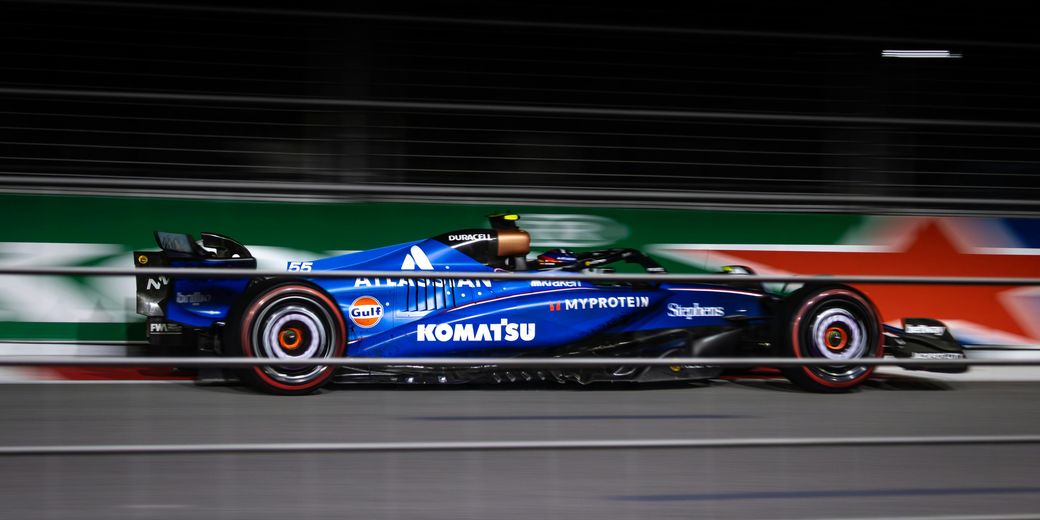
Carlos Sainz says Williams must “wake up” after qualifying 14th for the Belgian Grand Prix, admitting the car “doesn’t have any more” pace and that he does not believe the team can recover its lost ground this season.
Speaking to DAZN after a bleak Spa qualifying session, the Williams driver said he is regularly extracting the car’s maximum over one lap, but that the limitation now sits with the package itself. “We have to wake up,” Sainz said. “Unfortunately, that’s all the car has.” He added that Williams knows it is falling short of the standard it expected to reach. “As a team, we know we are not delivering the level or the standard we promised and that we should be delivering.”
The most striking part of Sainz’s assessment was his lack of faith that an in-season reset can change the picture. He said even a possible “car B” and new chassis would not match the rate of progress being made by rivals. “I don’t think this year, even if there is a car B, with a new chassis and so on, it will be anything like the steps the others are making,” he said. Sainz pointed directly to Racing Bulls as the reference Williams is failing to match, saying its rival gains “two tenths” almost every time it brings an update, while Williams “has not brought a single upgrade like that this year.” He added that the planned improvement for Baku “will not be enough.”
At Spa, that gap has left Williams effectively in its own fight at the back of the midfield. Sainz said Haas is the team closest to it, while Alpine is three to four tenths faster, Audi six to seven tenths ahead, and Racing Bulls a full second clear. That spread, he argued, has changed the nature of the midfield battle compared with 2025. Back then, one strong lap could swing a car from Q1 to Q3. Now, Sainz said, there is “a second of difference in the midfield,” enough that “not even the lap of your life” changes the outcome.
His comments in Belgium followed the disappointment of Silverstone, where Williams introduced an upgrade but remained far adrift on a circuit that exposed its weaknesses in aerodynamic load, drag and weight. Looking back on that weekend, Sainz said the package broadly delivered what the team should have expected, amounting to only a few tenths rather than a meaningful step forward. The frustration, he said then, was not that the update failed completely, but that it revealed “how far away we were from where we want to be.” At Silverstone, he said Williams had been two seconds off the leaders and one second behind Racing Bulls.
Spa only reinforced that conclusion. Sainz described it as a very difficult weekend in which Williams had car problems from practice that limited what he could learn, and he said the team found an issue only just before qualifying. Even after that, the best result available was a return to the same pattern he has seen most of the season: getting through Q1, then fighting at the edge of Q2 with little margin to do more.
With that, Sainz said the realistic target now is not a late-season turnaround but extracting lessons from a failed 2026 package and applying them to next year’s design. “It’s hard for me to think we’re going to get out of this this year,” he said. “What I do want to think is that we are learning as much as possible so we can already be designing next year’s car in a much more competitive way, because it’s clear we are not going to find this year’s car.”