 Racing
 © Eterna
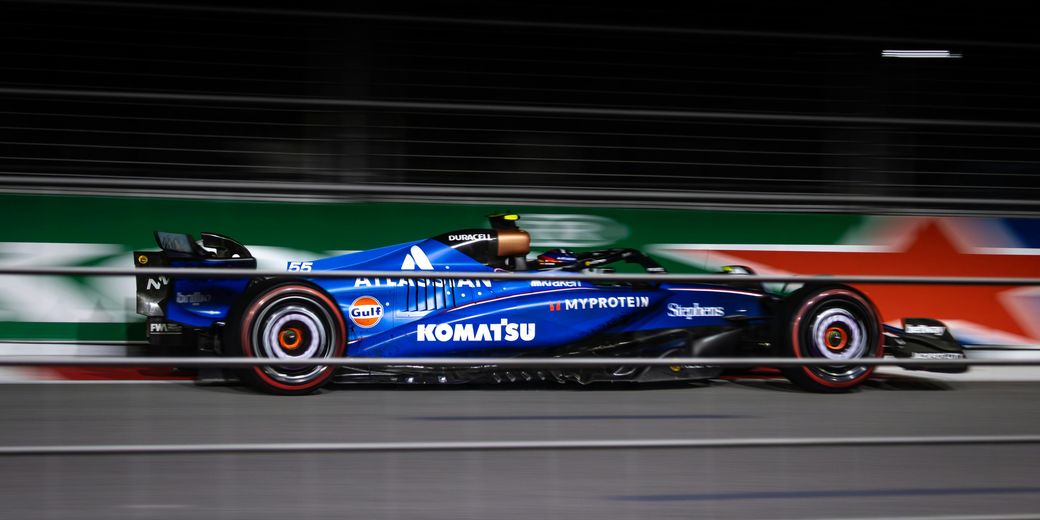
Carlos Sainz says Formula 1 qualifying in 2026 has flipped a driver’s instinct on its head. At Suzuka, the Williams driver explained that pushing harder can now make the car slower, because the energy-management system punishes laps that are too aggressive.
That was the backdrop to Sainz finally reaching Q2 at the Japanese Grand Prix, even though he still qualified 16th for Williams. Speaking to the media in Japan, Sainz said he feels he is close to understanding what the new rules demand. “Honestly, my group of engineers and myself, we’ve done a very good job over the winter to understand it,” Sainz, Williams driver, said to the media in Japan. “And in that sense, I think I’m 90, 95 per cent close to understanding everything.”
His point was simple: qualifying is no longer just about attacking a lap from start to finish. According to Sainz, the batteries cannot support that approach under the new regulations, so the fastest lap now comes from managing the car’s energy and resisting the urge to overdrive it.
“There’s definitely surprises that come now and then, but I feel like I’ve been not very surprised by it, given how new it is,” Sainz, Williams driver, said to the media in Japan. “It’s more how disciplined you want to be with your driving.” He then described what happens when a driver falls back on instinct in Q2 or Q3. “So it’s how your natural instinct, or animal instinct, kicks in in a Q2 lap or a Q3 lap, when you go and push that out, how much you’re gonna upset the system, and the system is gonna backfire in you,” Sainz, Williams driver, said to the media in Japan.
The change comes from the 2026 power-unit overhaul. The new package has a 50/50 split between electrical and combustion power, according to the source material, and the energy-recovery systems can recover twice as much energy per lap as they did last year. The MGU-H has also been removed, according to the source material. Those changes have brought more lift-and-coast, more battery harvesting and more “super clipping,” while the old idea of a flat-out qualifying lap from start to finish has disappeared.
Sainz’s early results in this new format show how steep the adjustment has been. The source material says the former Ferrari pole-sitter, who has six career poles, failed to set a lap in Australia because of a battery issue. He then qualified 17th in China before making Q2 for the first time in Japan.
Even with that progress, Sainz said the new style still leaves drivers feeling they left time on the table. “You always feel like you could have done better, you always feel like you could have done more, you always feel like you can be more efficient when you’re driving,” Sainz, Williams driver, said to the media in Japan. But he said the answer is not more bravery. “But the reality is that I think, from my side, I understand it’s just how disciplined I want to be with it,” Sainz, Williams driver, said to the media in Japan.