 Racing
 © Eterna
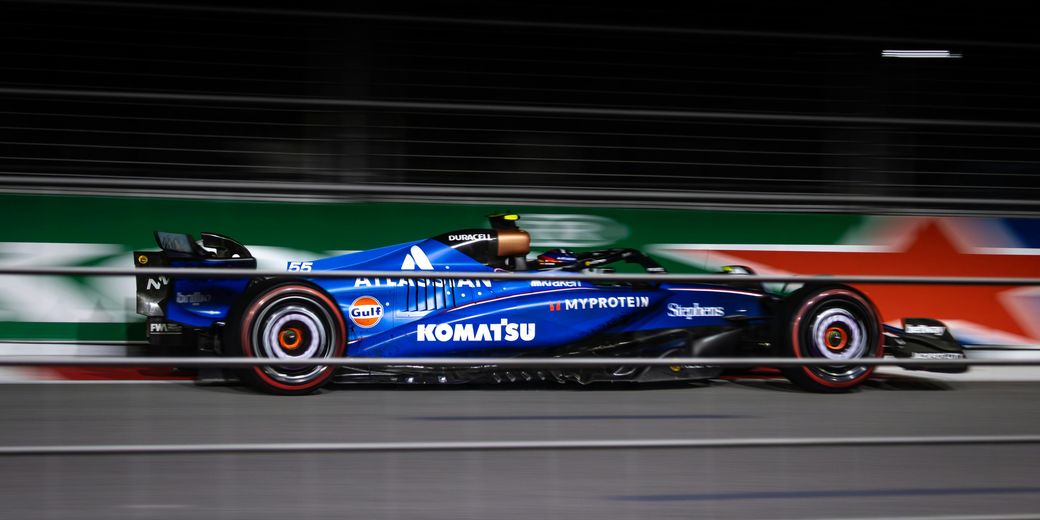
James Vowles says Williams’ recent step forward has become a test of whether his rebuild is real, with the gains seen since Miami helping convince Carlos Sainz and Alex Albon that the team can recover from a poor start to 2026 rather than fall back into old habits.
That matters because Williams began the season as only the ninth-best team after finishing fifth in the 2025 constructors’ standings, and dropped to eighth with seven points. The difficult winter revived doubts Vowles thought the team had shed, after Williams had started to move away from its old reputation as an outfit that could unravel quickly.
Vowles said the response since May was important first as proof to the team’s leadership that the rebuild could withstand a setback. James Vowles, Williams team principal, said it was “very important for me and for my board, so I do not mean the drivers, to demonstrate that we are not the Williams of old. Before, after having had a difficult winter, we would already have fallen behind.” He added: “I want to show that we have the ability to come back and improve performance at a very high rate. That is what we are doing right now.”
Canada still showed the gap between improvement and execution. Sainz finished ninth, but Vowles admitted Williams did not get everything right and that there were decisions with Sainz the team would have taken differently in hindsight. Albon’s race ended more painfully, after contact with Oscar Piastri put him out despite what Vowles described as a points-capable car and a strong position before he was taken out.
Even so, Williams has treated Miami and Montreal as evidence that the FW48 is finally responding to development in a way the team had struggled to achieve in previous years. Vowles has pointed to that trend, rather than the final Canada result alone, as the clearest sign the team is moving forward.
Williams also moved quickly away from the track to answer the problems exposed over the winter. The team reinforced its Grove structure with four senior hires, bringing in former McLaren operations director Piers Thynne as director of optimization and planning, along with Claire Simpson as head of aerodynamic development, Fred Judd as performance optimization lead, and Steve Booth as vehicle engineering director.
The recruitment drive followed Vowles’ admission that the car arrived late, overweight and with production and operational weaknesses laid bare. He said Williams needed to show it was no longer the old version of the team that would endure a bad winter and stay at the back, and that the new systems and foundations being put in place were still valid.
That is where the drivers come in. Vowles said Williams’ aim is not simply to give them occasional Q3 appearances, but to prove the team has the structure to solve problems when they arise. On the speculation around their futures, he said: “Talk to Alex, talk to Carlos. They want to be part of this journey, and that is the best thing I can tell you. My job in this is to make sure that they want that too.”
Sainz has also backed the team’s reaction. Carlos Sainz, Williams driver, said in Canada that after the winter difficulties it became clear Williams was still below the level it should be in multiple areas, but that the team took “very quick measures” to address that and hire “some key people.” He pointed specifically to Thynne, whom he knows from McLaren, saying he should be a big help across production and operations.
Williams is still well short of where it wants to be, and Vowles has said the team has not yet done enough. But the combination of visible car progress and rapid structural changes has shifted the immediate pressure from damage control to proof of viability, which may matter as much as points if Williams is to keep both Sainz and Albon committed to the project.